Showing posts with label astronomy. Show all posts

Carbon Content in Dwarf Stars

20250405-ngc7789
Explore how white dwarfs contribute essential carbon to the cosmos, impacting debates about its origins in the Milky Way.

Read more

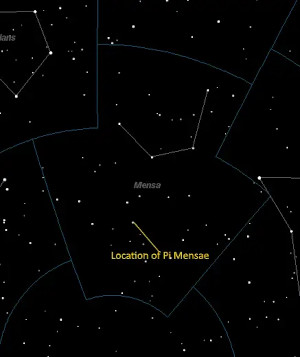
The architecture of Pi Mensae

20240905-pi-mensae-location
Few days before the formal acceptance of this paper, an independent study about the architecture of the π Men planetary system was published(1). The results of that work, based on public data and not including the ESPRESSO observations, confirm the high mutual inclination of the orbital planes of π Men b and c. Our results are in agreement with those of Xuan & Wyatt and are characterized by a better formal precision.(2)
Pi Mensae, or π Men, is a yellow dwarf star in the constellation of Mensa. We know that it has a little planetary system, constituted by two planets (or, if you prefer, we discover only two planets orbiting around Pi Mensae): Pi Mensae b, one of the most massive planets ever discovered, about 14.1 the mass of Jupiter, and Pi Mensae c, a super-Earth, about 4.5 the mass of our planet.
In 2020, an analysis with Gaia DR2 and Hipparcos astrometry showed that planets b and c are located on orbits mutually inclined by 49°-131°, which causes planet c to not transit most of the time, and acquire large misalignments with its host star's spin axis(1).
This result was discovered also by an italian team(2), but published just few days after on arXiv, using ESPRESSO (Echelle Spectrograph for Rocky Exoplanet- and Stable Spectroscopic Observations), a sèectrograph designed and developed in Italy by researchers of Brera's Astronomical Observatory at the Merate's laboratories. The instrument, mounted on the Very Large Telescope, has in a certain sense been tested with the planetary system of Pi Mensae, therefore, even coming seconds for a few, the result can be considered a success for the young ESPRESSO.
  1. Xuan, J. W., & Wyatt, M. C. (2020). Evidence for a high mutual inclination between the cold Jupiter and transiting super Earth orbiting π Men. Monthly Notices of the Royal Astronomical Society, 497(2), 2096-2118. doi:10.1093/mnras/staa2033 (arXiv) ↩︎ ↩︎

  2. Damasso, M., Sozzetti, A., Lovis, C., Barros, S. C. C., Sousa, S. G., Demangeon, O. D. S., ... & Rebolo, R. (2020). A precise architecture characterization of the π\pi Men planetary system. A&A, Forthcoming article doi:10.1051/0004-6361/202038416 (arXiv) ↩︎ ↩︎
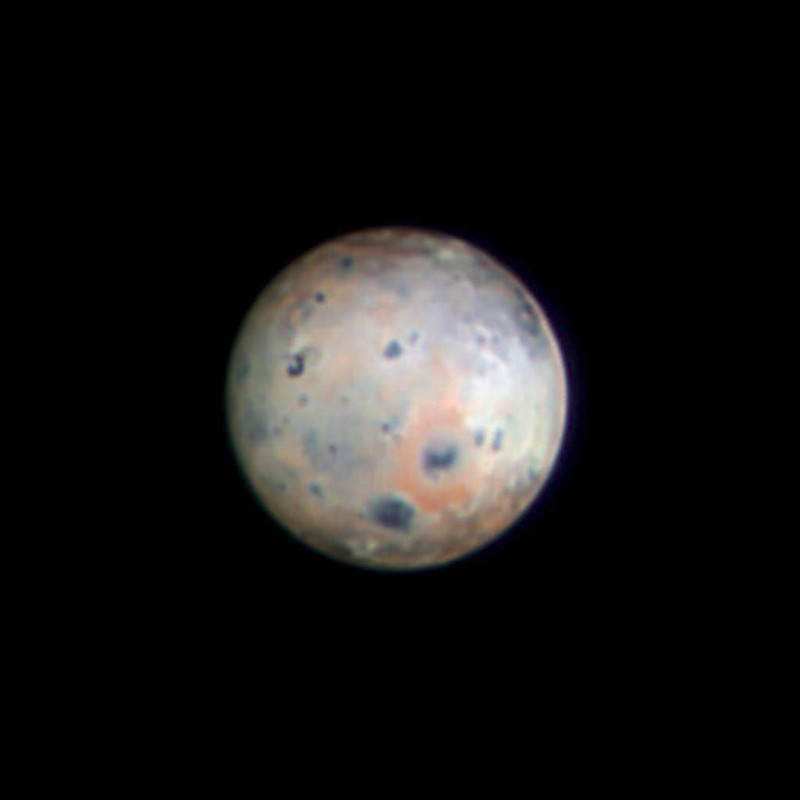
Portrait of a Jovian satellite

io-SHARK-VIS-LBT
The Jovian moon Io, imaged by SHARK-VIS@LBT on January 10, 2024. The red, green, and blue channels of this tri-color image show the I (infrared), R (red), and V (green) spectral bands, respectively (corresponding at wavelengths of 755, 620 and 550 nanometers). This is the highest resolution image of Io ever obtained from a ground-based telescope.

The breath of the ancestors

J0923-0402
A research team led by the INAF (Istituto Nazionale di Astrofisica) and the University of Trieste has once again harnessed the very distant and energetic relativistic winds generated by a distant but decidedly active quasar (one of the brightest discovered so far). A study published in The Astrophysical Journal reports the first observation at different wavelengths of the interaction between the black hole and the quasar of the host galaxy J0923+0402 during the initial phases of the Universe, about 13 billion years ago (when the Universe was less than a billion years old). In addition to evidence of a gas storm generated by the black hole, experts have discovered for the first time a halo of gas extending well beyond the galaxy, suggesting the presence of material ejected from the galaxy itself via winds generated by the black hole.
Our study helps us understand how gas is expelled or captured by galaxies in the young Universe and how black holes grow and can impact the evolution of galaxies. We know that the fate of galaxies such as the Milky Way is closely linked to that of black holes, since these can generate galactic storms capable of extinguishing the formation of new stars. Studying the primordial eras allows us to understand the initial conditions of the Universe we see today. - Manuela Bischetti

The first extragalactic black hole

In the world of black hole researchers, there is a group led by Tomer Shenar that, so far, has mostly demonstrated the non-existence of black holes previously announced by other teams.
As Shenar himself recalled, however,
For the first time, our group has come together to discuss the discovery of a black hole, instead of eliminating one.
We are talking about a black hole found inside the Tarantula Nebula, which is part of the Large Magellanic Cloud, one of the satellite galaxies of the Milky Way.
In particular, this black hole, of stellar mass, is of the "dormant" type, that is, it emits very low levels of X radiation, which are the radiations with which black holes are generally discovered.
This happens because the black hole interacts very little with its surroundings.
Another interesting aspect of the discovery is the absence of any trace of the star that generated the black hole.
[It] appears to have completely collapsed, with no sign of a previous explosion.
This black hole, the first extragalactic, was discovered orbiting a massive star thanks to six years of observations at ESO's Very Large Telescope.

Fluorine in the early universe

Using ALMA (Atacama Large Millimeter/submillimeter Array), a team of astronomers has detected fluorine in a galaxy far, far away: its light reached us after a journey of over 12 billion years.
What we see of the NGP-190387 galaxy is a large cloud of gas crystallized at the time when the universe was only 1.4 billion years old. And since stars shed chemical elements into their surroundings only when they reach the end of their life, which generally ends explosively, the detection of fluorine in the gases of NGP-190387 implies that the stars in the galaxy must have lived relatively short lives. In particular these characteristics are possessed by the Wolf–Rayet stars.
Furthermore, the levels of fluorine in NGP-190387 (the first galaxy after the Milky Way where this chemical element was observed) are comparable to those of our galaxy, with the difference that the latter is older than a dozen and more than billions of years compared to NGP-190387.
We have shown that Wolf–Rayet stars, which are among the most massive stars known and can explode violently as they reach the end of their lives, help us, in a way, to maintain good dental health!
- Maximilien Franco from the University of Hertfordshire in the UK
(ESO's press release)

The space eye of Sauron

When the first image of the black hole, M87*, was released, several memes circulated online that repositioned the photo in different contexts. One of the best known was the one that placed M87* in the center of Sauron's eye as it was displayed in Peter Jackson's The Lord of the Rings trilogy.
The photo I present above, however, taken in 2008 by the Hubble Space Telescope is much more reminiscent of the evil eye of Sauron. It represents the debris disk around the star Fomalhaut, a white star in the constellation of Piscis Austrinus approximately 25 light years away. In 2008, an exoplanet was also discovered, Fomalhaut b (also known as Dagon, a perfect name for Halloween parties!), although there are still doubts about its existence (probably it does not exist, at least not yet).
The curiosity about this star is that the protagonist of Stanislaw Lem's Return from the Universe returns to Earth after a space exploration trip right around Fomalhaut: the book is dated 1961, almost fifty years before astronomers discovered clues about the possible existence of Dagon.

42: A family portrait

No, this is not the towel day, but what ESO released yesterday is undoubtedly something quite useful for any space tourist: a series of 42 detailed images of the largest asteroids in the solar system.
The main asteroid belt, located just beyond the orbit of Mars, is made up of rocky objects of various sizes, reaching up to 200 km in diameter, without forgetting the largest of all, Ceres and Vesta, respectively 940 and 520 kilometers in diameter. The family portrait of the 42 asteroids was made using the Very Large Telescope:

The Case for Dwarf K Stars

20210914-61-cygni
61 Cygni, a binary K-type star system - via commons
The stellar main-sequence is a strip that cuts diagonally the Hertzsprung-Russell diagram, a star's plot of stellar color versus brightness. The main feature of main-sequence stars is that they burn hydrogen. In this group the K dwarfs, or orange dwarfs, are intermediate stars in size between red M stars (red dwarfs) and yellow G stars. Their mass is between 0.5 and 0.8 times the Sun's mass and surface temperature is bewteen 3900 and 5200 K.
In the last few years these type of stars have become particularly interesting to astronomers, as they appear to have the characteristics to host life-as-we-know:

Uchuu: Universes' creator

If you are a superheroes' comics readers, you probably know All-Star Superman by Grant Morrison and Frank Quitely (if you want, I could publish a review of this comic). At some point in the story, Superman designs a small cubic universe to see what would happen on a planet like Earth without his presence. The development of intelligent life was also included in the Superman's simulation, but in essence even those of astronomers are structured in the same way: a cube of space of finite dimensions whose evolution is driven by a network of dark matter and dark energy.
At the end of the july 2021 it was realased Uchuu, presented as a suite of large high-resolution cosmological N-body simulations, in practice, a simulation that shows the evolution of dark matter structures in a cube of 9.63 billion light years on each side and made up of 2.1 trillion particles.
Uchuu's main goal is to shed light on the dark matter halos surrounding galaxies, but the researchers think that another field of use for their simulation is the study of gravitational lenses.
In any case, it is a tool that could be very useful for improving the algorithms generally used in astronomy to process the data collected by instruments such as satellites and telescopes.
Ishiyama, T., Prada, F., Klypin, A. A., Sinha, M., Metcalf, R. B., Jullo, E., ... & Vega-Martínez, C. A. (2021). The Uchuu simulations: Data Release 1 and dark matter halo concentrations. Monthly Notices of the Royal Astronomical Society, 506(3), 4210-4231. doi:10.1093/mnras/stab1755 (arXiv)
Read also:
Skies & Universes
Uchuu project on Git-Hub

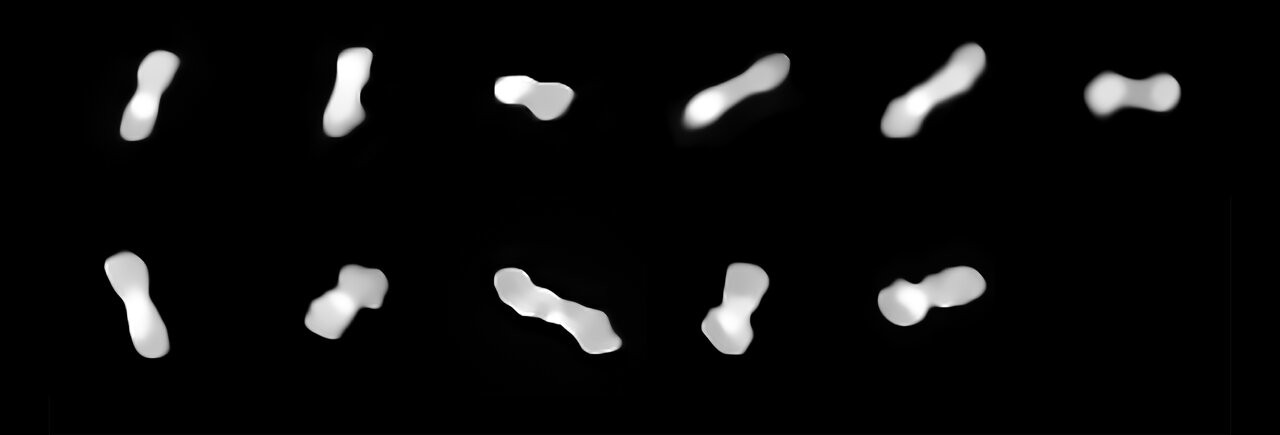
The dog-bone asteroid

20210909-kleopatra-asteroid
Using the European Southern Observatory's Very Large Telescope (ESO's VLT), a team of astronomers have obtained the sharpest and most detailed images yet of the asteroid Kleopatra. The observations have allowed the team to constrain the 3D shape and mass of this peculiar asteroid, which resembles a dog bone, to a higher accuracy than ever before. Their research provides clues as to how this asteroid and the two moons that orbit it formed.
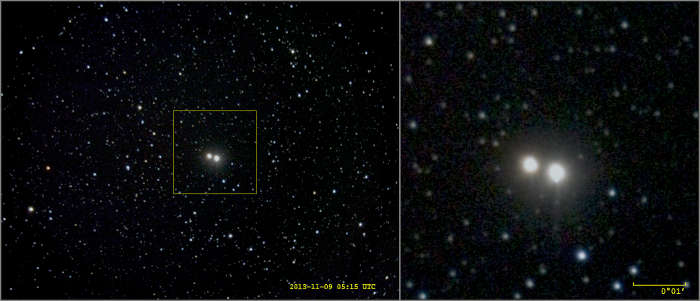
Kleopatra also possesses another characteristic: a two-moon system discovered in 2008 by Franck Marchis' team at the Keck Observatory.
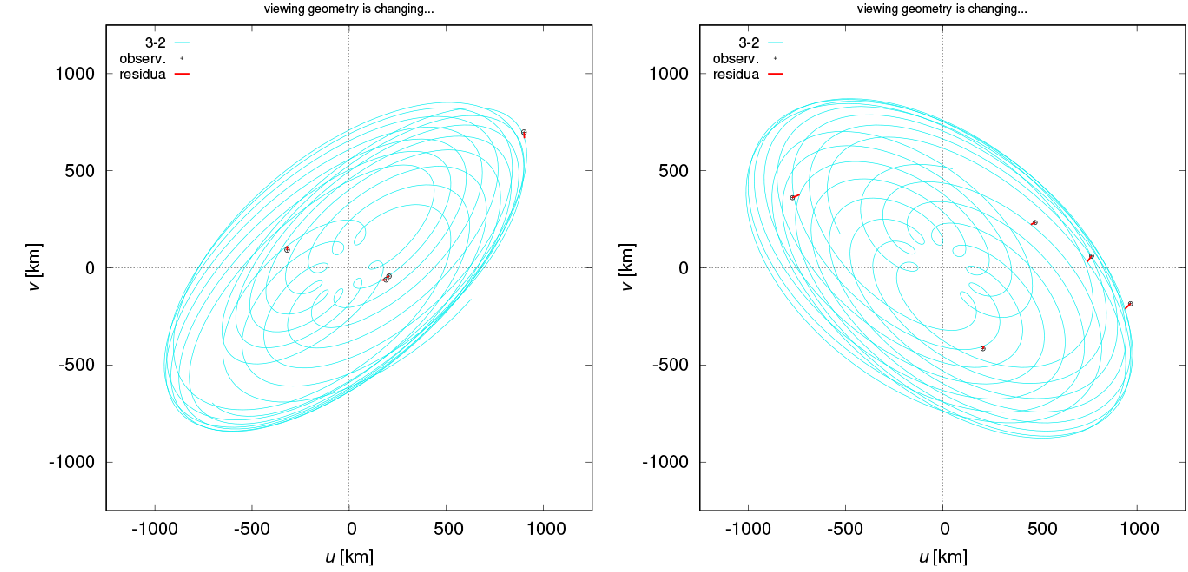
It is interesting to observe that the dynamics of Kleopatra's three-body system and its moons turn out to be chaotic. I hope to soon publish an article on the problem of the three bodies to clarify this aspect.
20210909-kleopatra-three-body-system

Read ESO's press release
Marchis, F., Jorda, L., Vernazza, P., Brož, M., Hanuš, J., Ferrais, M., ... & Yang, B. (2021). (216) Kleopatra, a low density critically rotating M-type asteroid. Astronomy&Astrophysics, 653. doi:10.1051/0004-6361/202140874
Broz, M., Marchis, F., Jorda, L., Hanuš, J., Vernazza, P., Ferrais, M., ... & Yang, B. (2021). An advanced multipole model for (216) Kleopatra triple system. Astronomy&Astrophysics, 653. doi:10.1051/0004-6361/202140901
Descamps, P., Marchis, F., Berthier, J., Emery, J. P., Duchêne, G., De Pater, I., ... & Macomber, B. (2011). Triplicity and physical characteristics of Asteroid (216) Kleopatra. Icarus, 211(2), 1022-1033. doi:10.1016/j.icarus.2010.11.016

Slender Galaxies

The tradition of horror stories is full of hooded characters, but the great success of creepy pasta, short stories, but also animations and illustrations spread online, has led to the success of a particularly disturbing character, Eric Knudsen's Slender Man. And the above shot taken by the Hubble Space Telescope on June 19, 2019 is somewhat reminiscent of that disturbing kidnapper of children. From an astronomical point of view, the image captured a particularly advanced collision of two galaxies.
But as a fan of superhero comics I find that also Mr. Bloom, a Batman's villain recently introduced (2015), could be a very good alter ego of Arp-Madore 2026-424.

Supermassive web hole

With the help of ESO’s Very Large Telescope (VLT), astronomers have found six galaxies lying around a supermassive black hole when the Universe was less than a billion years old. This is the first time such a close grouping has been seen so soon after the Big Bang and the finding helps us better understand how supermassive black holes, one of which exists at the centre of our Milky Way, formed and grew to their enormous sizes so quickly. It supports the theory that black holes can grow rapidly within large, web-like structures which contain plenty of gas to fuel them.
The location of the supermassive black hole is in the Sextans' constellation.
Sextans is a small and dark constellation straddling the celestial equator and located near Leo. Introduced in 1687 by Johannes Hevelius, thanks to its equatorial position, the Sextant is visible from most of the Earth's surface.
The main stars are not particularly bright, but with a particularly clean sky it is possible to identify them even with the naked eye, in particular Alpha Sextantis, a blue-white giant with a magnitude of 4.48, and 35 Sextantis, an orange double star, the whose main star has a magnitude of 5.79. Also noteworthy there are the white Gamma Sextantis (magnitude 5.07) and the blue Beta Sextantis (magnitude 5.08).
(via ESO)

The distance from the Moon

The method currently used to evaluate the distance from the Moon dates back to 1962, when a team from MIT (Massachusetts Institute of Technology) in collaboration with soviet astronomers from the Crimean Astrophysical Observatory carried out an experiment to measure the round-trip time of a laser pulse reflected on the surface of the Moon. The evolution of this experiment was completed thanks to the Apollo missions of 1969, when the astronauts placed reflective mirrors on the lunar surface in order to improve the accuracy of the measurement. Lasers traveling to the Moon involve multiple structures and are part of the Lunar Laser Ranging.
The distance measurement from this project is 384402 km with an error of 1.1 millimeters(1), which in terms of light time corresponds to just under 1.3 seconds.
The pre-laser method is also inspired by the same principle: in 1957 the US Naval Research Laboratory sent 2 μs radar pulses from a radio antenna with a diameter of about 15 meters. After the echo produced by the waves on the surface of the Moon, the experiment detected the return signal and measured the delay time, from which to derive the distance from our satellite. Unfortunately, this experiment was subject to an excessively high error with respect to the signal and therefore the result produced was not considered reliable(2).
The experiment was repeated the following year, in 1958, by the Royal Radar Establishment in Great Britain. In that case, radar pulses of 5 μs were sent with a maximum power of 2 megawatts and a frequency of 260 pulses per second(3).

Rocks from space


via commons
Our solar system is crossed by a lot of rocks like comets and meteorites. Following the panspermia hypotesis, these cosmic objects could be at the origin of life-as-we-know. And two paper recently published seems confirmed it.
Comet 21P/Giacomini-Zinner belongs to the cometary family of Jupiter, with an orbital period of about 6.6 years. Discovered on the 20th decembre 1900 by Michel Giacobini, it could be the origin of the Draconids meteor shower. In July 2005 a japanese team of astronomers decided to observe 21P using the Comics instrument (Cooled Mid-Infrared Camera and Spectrometer) mounted on the Subaru telescope. Now they have concluded the examination of data, detecting an unidentified infrared emission, as well as thermal emissions generated by the silicate and carbon grains, which is probably due to complex organic molecules.
Ootsubo, T., Kawakita, H., Shinnaka, Y., Watanabe, J. I., & Honda, M. (2020). Unidentified infrared emission features in mid-infrared spectrum of comet 21P/Giacobini-Zinner. Icarus, 338, 113450. doi:10.1016/j.icarus.2019.113450
In the meanwhile another japanese team studied a couple of meteorites falled on Earth: Nwa 801, recovered in 2001 in Morocco, and Murchison, fallen in Australia in 1969.
Also in these cases the results are very interesting: the team, indeed, find some sugars essential for life: ribose and other biotic sugars, including arabinose and xylose. In particular the ribose is an essential component of ribonucleic acid, commonly known as Rna, a molecule of fundamental importance for life. This nucleic acid, in fact, performs the delicate function of copying the genetic instructions contained in the DNA molecule (deoxyribonucleic acid) to deliver them to the molecular factories inside the cell, called ribosomes, where proteins are synthesized.
Furukawa, Y., Chikaraishi, Y., Ohkouchi, N., Ogawa, N. O., Glavin, D. P., Dworkin, J. P., ... & Nakamura, T. (2019). Extraterrestrial ribose and other sugars in primitive meteorites. Proceedings of the National Academy of Sciences, 116(49), 24440-24445. doi:10.1073/pnas.1907169116

A journey to Proxima Centauri


Proxima Centauri is a red dwarf located approximately 4.2 light years from us, in the area of ​​sky covered by the Centaur constellation. Thanks to ESO's telescopes, in particular to the HARPS spectrograph, and using the Doppler (or radial velocity) method, in 2016 it was anounced the discovery of a planet around this star, Proxima Centauri b.
Given the proximity, one might think that the world of comics has devoted much attention in recent years to the star and its planet. In fact, to have a comic set around this star, you have to wait until the second half of 2018 when Image Comics publishes the six-issue miniseries Proxima Centauri by Farel Dalrymple.
The work, subsequently collected in volume in January 2019, is halfway between science fiction and fantasy. The main character is Sherwood Breadcoat, a teenage magician trapped on an artificial spheroid called Proxima Centauri, evidently put in orbit around the homonymous star. Of course, this information is not very clear, but overall the whole Dalrymple comic is rather lack of information, closed in a hermetic narration with an open ending that allows the author keep some subplots open, like the relationship between Sherwood and the scientist, that sometimes seems help the teen, other times usi it for his purposes; or as one of Sherwood's opponents, which is actually a sort of virtual, but also physical manifestation of a character hidden somewhere on the spheroid and who seems to be a videogame player, given that he explicitly states that he wants to repeat the vlash with Sherwood, although it ended badly more than once.
In all this, although science would seem to play a fundamental role, at least according to some lines of Breadcoat, a character who believes only in science and magic (?), it is a simple narrative accessory, a way to not deepen the technology used or to hide all the magical aspects of the story, only apparently sci-fi.
In any case, Dalrymple's comic is good to remember that, quite recently, a team of Italian astronomers, studying the data coming from Proxima Centauri with more accuracy, has supposed the existence of a second planet around the star, roughly six times more massive than Earth. We will see if it will be confirmed or not.

Using ultraviolet radiation against SARS-CoV-2


Alessio Zanuta
Astrophisicts of Brera's Astronmical Observatory in Milano are collaborating with researchers at Milano University are developing and testing ultraviolet devices for air disinfection and inactivation of the SARS-CoV-2 virus. The italian science magazine, Media INAF, has interviewed Alessio Zanuta. Here there is the english tranlsation. In the post I extracted an interesting quote:
(...) we are developing new ideas for fighting the virus in terms of disinfection
First of all by conducting targeted studies to understand how it behaves and which are in weak points of this virus if subjected to radiation. We speak above all of ultraviolet rays, and we wonder if they are effective in inactivating it, at what wavelengths, how long exposure it takes, and what doses. While there is a large literature on how Uv rays - especially the most energetic ones (the so-called Uv-C rays) - have effective sanitizing effects also on viruses, currently specific information on the doses necessary to specifically annihilate the Sars-Cov-2 virus is lacking responsible for the current pandemic. This bibliography information is missing right now, either because the virus is new, or because the similarities with other types of viruses are labile. After collecting all the necessary data, we aim to develop devices useful for disinfection. Furthermore, the idea that even less energetic rays, those emitted by the Sun and which are not absorbed by the atmosphere, can have a disinfectant effect, with important epidemiological consequences and with interesting information to manage the so-called "Phase 2" in return from the lockdown. In the summer, there could be a drop in infections, also thanks to greater illumination by the Sun.

Road to Mercury: flyby with Earth

A flyby is close passage of a space probe, at high speed, near a planet or other celestial object. It can be used to speed up or slow down the space probe.
The first successful planetary flyby ever made was performed the 14th December 1962 by the Mariner 2 NASA spacecraft with the planet Venus, but it was with the Mariner 10 mission, thanks to an intuition of the italian Mathematician Giuseppe Colombo in 1970, that we use now the flyby as orbital correction maneuver. Indeed, the professor from Paduan was invited from the JPL to participate in a conference about the Mariner 10 directed to Mercury. When he observed the spacecraft computed orbit, he noted that the Mariner 10 would have an orbital period around the sun twice the Mercury year. Hence, he suggested to carfully calibrate the first passage over Mercury in such a way that the spacecraft would have exactly the delta velocity from the planet to re-encounter Mercury at the next revolution. His suggestion was fully accepted and, thanks to him, Mercury 10 (llaunched in the 1973 on its way to Venus) had its first flyby with Mercury on 5th February 1974, and a second a third flyby on 21th September 1974, and also a third on 16th March 1975. The change in trajectory found by Giuseppe Colombo allowed to greatly increase the scientific return of the mission, as well as the scientific knowledge of the planet Mercury.
(...)
On the early morning of the 10th of April, there will be the possibility, hopefully, to observe the crossing on the sky of BepiColombo spacecraft crossing the sky from East to West. The closest approach is foreseen at 04.25 UTC with a minimum distance of 12.677 km from the Earth's surface.
If you want to compute your own plot for your location by inserting latitude and longitude here: https://bepicolombo.iaps.inaf.it.

source: esa

Updates from outer space: from Earth to K2-18 b

There are some interesting news about the research of exoplanets, but the first step starting from our planet, the Earth. Indeed, Evelyn Macdonald and Nicolas Cowan used the satellite Scicast to detect the transit spectrum of our planet. The idea is to deduce the atmosphere composition, obtaining the Earth's organic signature, and in this way data to confront with exoplanets transit spectrum.
Macdonald, E. J., & Cowan, N. B. (2019). An empirical infrared transit spectrum of Earth: opacity windows and biosignatures. Monthly Notices of the Royal Astronomical Society, 489(1), 196-204. doi:10.1093/mnras/stz2047
About two weeks after the pubblication of the previous paper, an international team of astronomers have discovered water vapor in the atmosphere of K2-18 b, an exoplanet that orbit in the habitable zone of the red dwarf K2-18. While it was initially considered a mini-Neptune on its 2015 discovery, the improved data on K2-18b has classified it as a super-Earth, although its size and density make it unlikely to be composed entirely of rocky iron and silicates.
Tsiaras A., Waldmann I. P., Tinetti G., Tennyson J., Yurchenko S. N. (2019). Water vapour in the atmosphere of the habitable-zone eight-Earth-mass planet K2-18 b. Nature Astronomy. doi:10.1038/s41550-019-0878-9

The great question about the Hubble constant

The Hubble-Lemaitre law is the mathematical formula bout the expanding universe. One of the collateral results of Einstein's theory of relativity was an expanding and non-static universe, a result that, in a first time, Einstein himself had disavowed. Yet various observations made in the second half of the 20s of the twentieth century instead confirmed the hypothesis of cosmic expansion(1, 2). \[z = H_0 \frac{D}{c}\] where $c$ is the speed of light, $H_0$ is the Hubble constant, while $z$ and $D$ are the light's redshift and the distance of the galaxy from the observer. The redshift, in particular, is due to the Doppler effect applied to electromagnetic waves. For example, when you hear the siren of an ambulance, it will seem to you stronger or weaker if approaching or moving away from your position. An electromagnetic wave, like light, instead will be closer to blue or red depending on whether it is closer to or away from the observer.
So, it has a certain importance to measure the redshift of the galaxies around us: evidently a null or little redshift was a clue to a static universe, otherwise we live in a dynamic universe, as you can see from the image present in the historical Hubble article(2):