The architecture of Pi Mensae

20240905-pi-mensae-location
Few days before the formal acceptance of this paper, an independent study about the architecture of the π Men planetary system was published(1). The results of that work, based on public data and not including the ESPRESSO observations, confirm the high mutual inclination of the orbital planes of π Men b and c. Our results are in agreement with those of Xuan & Wyatt and are characterized by a better formal precision.(2)
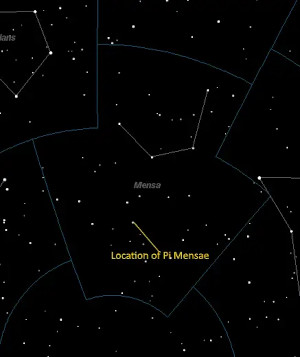
Pi Mensae, or π Men, is a yellow dwarf star in the constellation of Mensa. We know that it has a little planetary system, constituted by two planets (or, if you prefer, we discover only two planets orbiting around Pi Mensae): Pi Mensae b, one of the most massive planets ever discovered, about 14.1 the mass of Jupiter, and Pi Mensae c, a super-Earth, about 4.5 the mass of our planet.
In 2020, an analysis with Gaia DR2 and Hipparcos astrometry showed that planets b and c are located on orbits mutually inclined by 49°-131°, which causes planet c to not transit most of the time, and acquire large misalignments with its host star's spin axis(1).
This result was discovered also by an italian team(2), but published just few days after on arXiv, using ESPRESSO (Echelle Spectrograph for Rocky Exoplanet- and Stable Spectroscopic Observations), a sèectrograph designed and developed in Italy by researchers of Brera's Astronomical Observatory at the Merate's laboratories. The instrument, mounted on the Very Large Telescope, has in a certain sense been tested with the planetary system of Pi Mensae, therefore, even coming seconds for a few, the result can be considered a success for the young ESPRESSO.
  1. Xuan, J. W., & Wyatt, M. C. (2020). Evidence for a high mutual inclination between the cold Jupiter and transiting super Earth orbiting π Men. Monthly Notices of the Royal Astronomical Society, 497(2), 2096-2118. doi:10.1093/mnras/staa2033 (arXiv) ↩︎ ↩︎

  2. Damasso, M., Sozzetti, A., Lovis, C., Barros, S. C. C., Sousa, S. G., Demangeon, O. D. S., ... & Rebolo, R. (2020). A precise architecture characterization of the π\pi Men planetary system. A&A, Forthcoming article doi:10.1051/0004-6361/202038416 (arXiv) ↩︎ ↩︎
Portrait of a Jovian satellite

io-SHARK-VIS-LBT
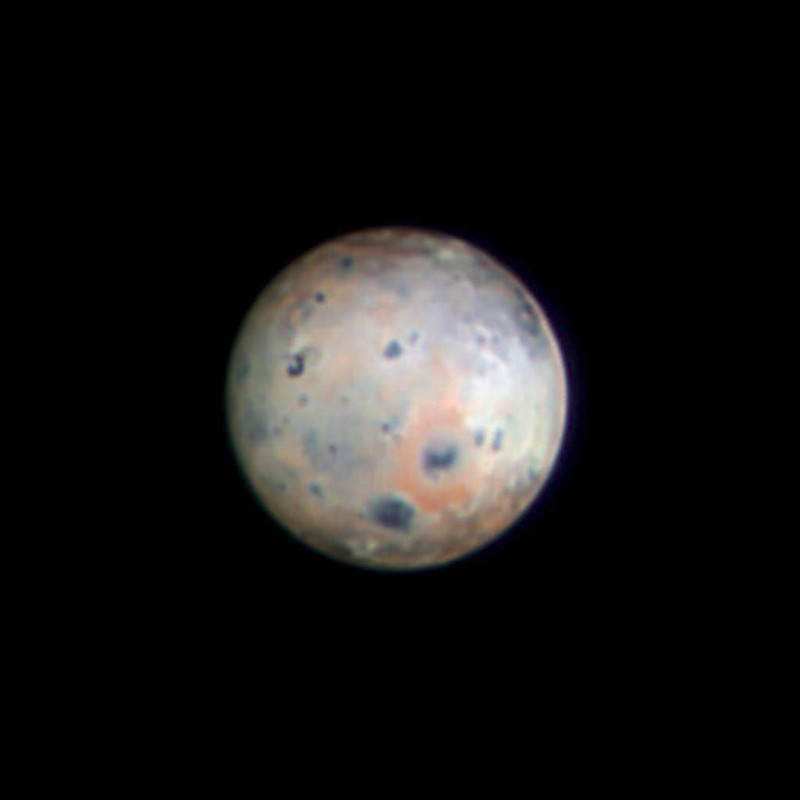
The Jovian moon Io, imaged by SHARK-VIS@LBT on January 10, 2024. The red, green, and blue channels of this tri-color image show the I (infrared), R (red), and V (green) spectral bands, respectively (corresponding at wavelengths of 755, 620 and 550 nanometers). This is the highest resolution image of Io ever obtained from a ground-based telescope.

The breath of the ancestors

J0923-0402
A research team led by the INAF (Istituto Nazionale di Astrofisica) and the University of Trieste has once again harnessed the very distant and energetic relativistic winds generated by a distant but decidedly active quasar (one of the brightest discovered so far). A study published in The Astrophysical Journal reports the first observation at different wavelengths of the interaction between the black hole and the quasar of the host galaxy J0923+0402 during the initial phases of the Universe, about 13 billion years ago (when the Universe was less than a billion years old). In addition to evidence of a gas storm generated by the black hole, experts have discovered for the first time a halo of gas extending well beyond the galaxy, suggesting the presence of material ejected from the galaxy itself via winds generated by the black hole.
Our study helps us understand how gas is expelled or captured by galaxies in the young Universe and how black holes grow and can impact the evolution of galaxies. We know that the fate of galaxies such as the Milky Way is closely linked to that of black holes, since these can generate galactic storms capable of extinguishing the formation of new stars. Studying the primordial eras allows us to understand the initial conditions of the Universe we see today. - Manuela Bischetti

Good bye, Arno Penzias

20240704-arno-penzias
Unfortunately I heared of this news now through the Physics World newsletter, whose releases from the beginning of the year I am guilty of catching up with a guilty delay.
On January 22, 2024 Arno Penzias left us. He was 90 years old and had been awarded the Nobel Prize for Physics in 1978 for the discovery, together with Robert Wilson, of the cosmic microwave background radiation.
As the story goes, their discovery came by chance, while they were trying to eliminate background noise from the signals that the Bell Labs radio astronomy antenna was receiving.
In fact, another group of astronomers, headed by Robert Dicke, was also busy working on the question, and in the end he was "satisfied" with correctly interpreting the origin of the signal measured by the two researchers. The two articles, the observational one and the interpretative one, were published in the same issue of the Astrophysical Journal.
The story, as well as being told in the Physics World article linked at the beginning of this post, is also summarized in the video that you can see below:

Alan Turing and the sunflowers

Alan Turing was fascinated by mathematical patterns found in nature. In particular, he noticed that the Fibonacci sequence often occurred in sunflower seed heads. However, his theory that sunflower heads featured Fibonacci number sequences was left unfinished when he died in 1954, but some years ago a citizen science project led by the Museum of Science and Industry in Manchester and the Manchester Science Festival has found examples of Fibonacci sequences and other mathematical sequences in more than 500 sunflowers.
Inspired by this, I suggest a prompt to NightCafe, a text-to-image generator to celbrate Turing and his unstoppable mind:
20240704-alan-turing-sunflower-nightcafe

The first extragalactic black hole

In the world of black hole researchers, there is a group led by Tomer Shenar that, so far, has mostly demonstrated the non-existence of black holes previously announced by other teams.
As Shenar himself recalled, however,
For the first time, our group has come together to discuss the discovery of a black hole, instead of eliminating one.
We are talking about a black hole found inside the Tarantula Nebula, which is part of the Large Magellanic Cloud, one of the satellite galaxies of the Milky Way.
In particular, this black hole, of stellar mass, is of the "dormant" type, that is, it emits very low levels of X radiation, which are the radiations with which black holes are generally discovered.
This happens because the black hole interacts very little with its surroundings.
Another interesting aspect of the discovery is the absence of any trace of the star that generated the black hole.
[It] appears to have completely collapsed, with no sign of a previous explosion.
This black hole, the first extragalactic, was discovered orbiting a massive star thanks to six years of observations at ESO's Very Large Telescope.

Fields Medals 2022

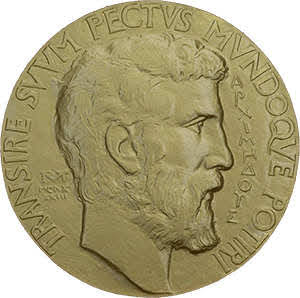
I hope to write something about the Ising model in the next weeks, but in the meanwhile you can read something about E8 group. Below you can find the mathematicians that awarded the Field Medals 2022:
Hugo Duminil-Copin
For solving longstanding problems in the probabilistic theory of phase transitions in statistical physics, especially in dimensions three and four.
June Huh
For bringing the ideas of Hodge theory to combinatorics, the proof of the Dowling–Wilson conjecture for geometric lattices, the proof of the Heron–Rota–Welsh conjecture for matroids, the development of the theory of Lorentzian polynomials, and the proof of the strong Mason conjecture.
James Maynard
For contributions to analytic number theory, which have led to major advances in the understanding of the structure of prime numbers and in Diophantine approximation.
Maryna Viazovska
For the proof that the E8 lattice provides the densest packing of identical spheres in 8 dimensions, and further contributions to related extremal problems and interpolation problems in Fourier analysis.